Abstract – Artificial Intelligence (AI) plays an increasing role in solving the optimization, regression, and classification problems in condition and health monitoring of power electronic converters. The outcomes from the condition and health monitoring are essential to operation optimization and predictive maintenance. This tutorial will cover three sub-topics: 1) introduction to condition and health monitoring in power electronics and its engineering problems; 2) introduction to AI methods and the motivation to apply them for the associated engineering problems; 3) case studies in parameter estimations, early failure prediction, and remaining useful lifetime prediction for power electronic applications.
Tutorials
|
TT-1: Prof. Huai Wang and Shuai Zhao
|
||
|
Prof. Huai Wang |
Shuai Zhao |
|
|
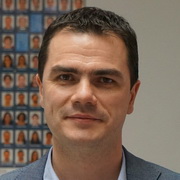
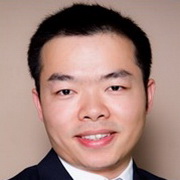
Huai Wang is currently Professor at the Center of Reliable Power Electronics (CORPE) at Aalborg University, Denmark. His research addresses the fundamental challenges in modeling and validation of power electronic component failure mechanisms, and application issues in system-level predictability, condition monitoring, circuit architecture, and robustness design. He also leads a project on light-AI for cognitive power electronics. His team collaborates with various industry companies across the value chain, from power electronic materials, components to systems. Prof. Wang lectures three short-term Industrial/PhD courses on Reliability of Power Electronic Systems, Design FMEA in Power Electronics, and Capacitors in Power Electronics Applications at Aalborg University. He has contributed more than 120 journal papers and co-edited a book on the Reliability of Power Electronic Converter Systems in 2015. He has given 25 tutorials at leading power electronics conferences (e.g., PCIM Europe, APEC, ECCE, etc.) and more than 80 invited talks. Prof. Wang received his PhD degree from the City University of Hong Kong, Hong Kong, China, and B. E. degree from the Huazhong University of Science and Technology, Wuhan, China. He was a short-term visiting scientist with the Massachusetts Institute of Technology (MIT), USA, and ETH Zurich, Switzerland. He was with the ABB Corporate Research Center, Baden, Switzerland, in 2009. Dr. Wang received the Richard M. Bass Outstanding Young Power Electronics Engineer Award from the IEEE Power Electronics Society in 2016 for the contribution to reliability of power electronic converter systems. He serves as General Chair of IEEE IFEC 2020 and Associate Editor of IEEE Transactions on Power Electronics. |
Shuai Zhao is currently a postdoctoral researcher with the Center of Reliable Power Electronics (CORPE), Department of Energy Technology, Aalborg University, Denmark. He received the BE (Hons), ME, and Ph.D. degrees in information and communication engineering from Northwestern Polytechnical University, Xi'an, China, in 2011, 2014, and 2018, respectively. From Sep. 2014 to Sep. 2016, he was a visiting Ph.D. student with the Department of Mechanical and Industrial Engineering at the University of Toronto, Toronto, ON, Canada, with a scholarship from the China Scholarship Council (CSC). In Aug. 2018, he was a visiting scholar with the Power Electronics and Drives Laboratory, Department of Electrical and Computer Science at the University of Texas at Dallas, Richardson, TX, USA. His research interests include system informatics, intelligent condition monitoring, diagnostics & prognostics, and tailored AI tools for power electronic systems. |
|
|
|
||
|
TT-2: Miroslav Vasić, Luis Gomez Navajas, Javier Galindos Vicente
|
||||
|
Miroslav Vasić |
Luis Gomez Navajas |
Javier Galindos Vicente |
||
|
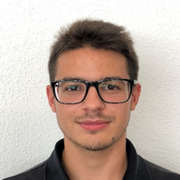
Miroslav Vasić was born in Serbia in 1981. He received the B.S. degree from the School of Electrical Engineering, University of Belgrade, Belgrade, Serbia, in 2005. Since then he has been working at Centro de Electrónica Industrial at ETSII (UPM) where he received his M.S. in 2007 and his Ph.D. degree in 2010. He has been working as assistant professor at UPM since 2015. |
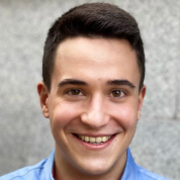
Luis Gómez Navajas was born in Jaraíz de la Vera, Spain, in 1997. He received the bachelor degree in industrial engineering from the Universidad Politecnica de Madrid, Madrid, Spain, in 2019. He is currently studying the double Master in industrial engineering and industrial electronics in the Universidad Politecnica de Madrid, Madrid, Spain. |
Javier Galindos Vicente received the B.S. degree in Industrial Engineering with a minor in Control and Industrial Electronics from ETSII-UPM, Madrid, Spain in 2020. He has done his Bachelor Thesis researching on the field of Power Electronics with GaN devices. (Spanish patent under evaluation). He is currently studying an MSc in Digital Manufacturing at EIT Digital (UPM-TalTech). At the same time, he is involved in a research project with AIRBUS D&S and UPM to characterize failure mechanism of GaN devices. His main interests include power electronics and AI. |
||
|
|
||||